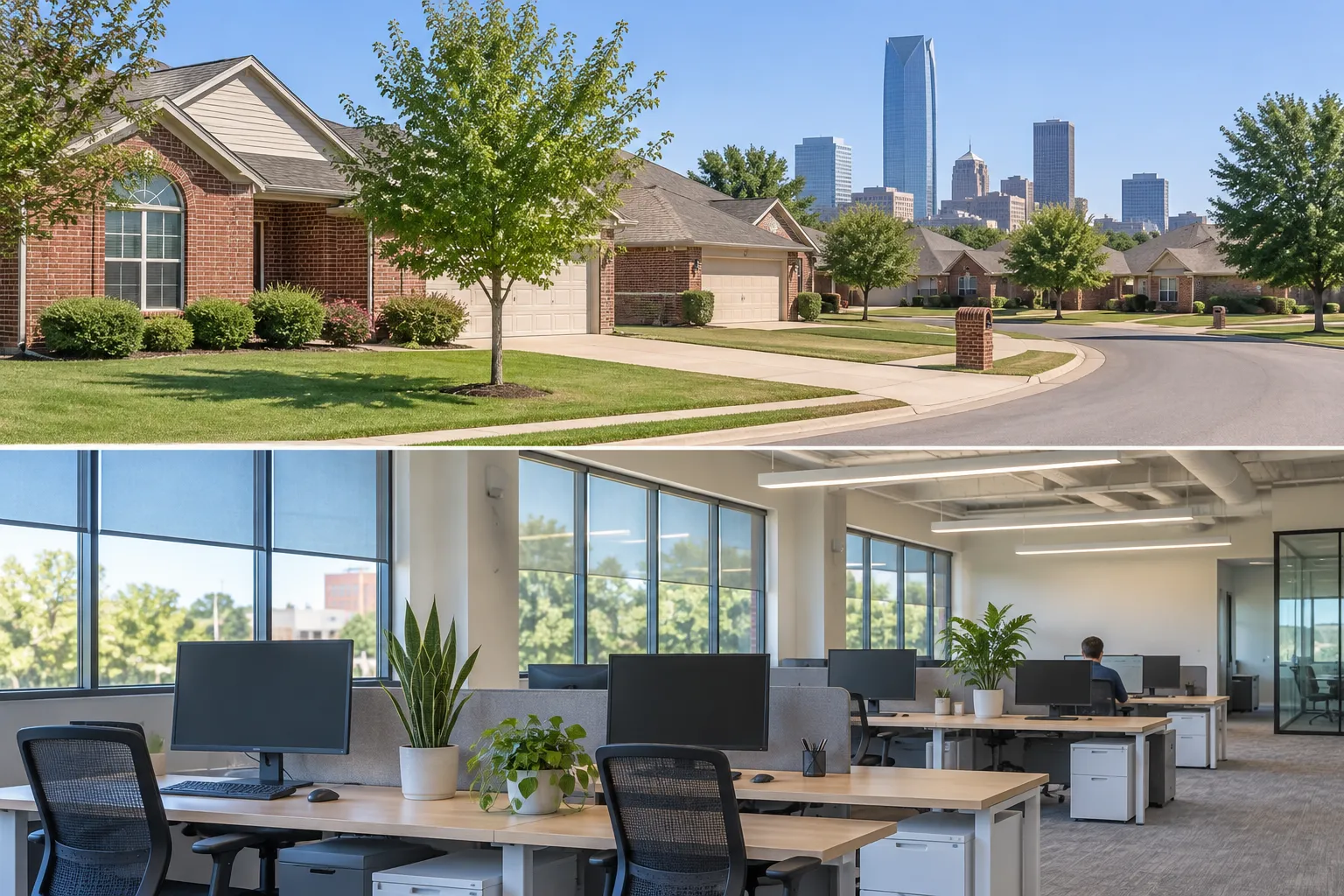
Commercial window tinting is window film installed on office, retail, clinic, school and other business glass to control heat, glare, privacy, security or appearance. In a building with large glass areas, cooling is a big share of the energy bill, and the International Window Film Association says film can often pay back its installation cost in a few years through lower cooling costs. Oklahoma City summers, with close to 70 days a year at 90°F or more, make that payback faster than in milder climates. This page covers the main types of commercial film, what each solves, and how we arrange a site visit and a written quote.
What does commercial window film do for a building?
Commercial window film reduces solar heat coming through the glass, cuts glare on screens, blocks up to 99% of UV to protect interiors and merchandise, and can add privacy, safety or branding. The result is more even temperatures, fewer complaints about hot and cold spots, and lower cooling costs on sunny elevations.
The benefits break down by goal:
- Energy and comfort: solar control film moderates hot spots near glass and reduces cooling load. The IWFA, citing Energy Star, says film may save 20% to 40% on energy costs during the cooling season, with the biggest gains on large, unshaded glass.
- Glare: fewer complaints from people working at screens near windows.
- Fade protection: slows fading of merchandise, flooring and furniture.
- Privacy: frosted or patterned film for conference rooms, clinics and ground-floor offices.
- Safety and security: thicker film that holds broken glass together.
- Branding: cut-vinyl or decorative film with patterns or a manufacturer's design options.
Which window film is best for an office building?
For most offices, a spectrally selective or ceramic solar film is the best starting point: strong heat and glare control while keeping daylight and the view. Add frosted or decorative film on interior glass partitions and conference rooms for privacy. The right film depends on the building's orientation, its glass type and what the tenants complain about.
| Problem | Film to ask about | Where it goes |
|---|---|---|
| Hot west and south offices | Spectrally selective or ceramic film | Exterior glazing |
| Screen glare | Light solar or glare control film | Desks near windows |
| Conference room privacy | Frosted or decorative film | Interior glass walls |
| Ground-floor security | Window security film | Street-level glass |
| Switch between clear and private | Smart film | Meeting rooms |
Our guide to office window film goes deeper on office layouts, and storefront window tint covers retail glass where display visibility matters.
How is a commercial window film job planned?
A commercial job starts with a site visit to measure the glass, check the glass type and its condition, look at sun exposure on each elevation, and agree on access and working hours. The installer then recommends films matched to the glass using manufacturer guidance, and you get a written quote before anything starts.
Things that are worth sorting out at the visit:
- Glass compatibility: some films are not suitable for certain insulated or tinted glass. Manufacturers publish film-to-glass tables, and a trained installer uses them.
- Access: upper floors may need lifts or scaffolding, which changes the price and schedule.
- Working hours: many businesses want installation after hours or in phases so offices stay open.
- Building rules: landlords, property managers or HOA-style associations may control how exterior glass looks. Mirrored or colored film often needs their approval.
- Warranties: quality commercial films come with manufacturer-backed written warranties. Ask what the warranty covers for commercial use, since terms can differ from residential.
Does window film help with storefront security?
Security film makes glass harder to get through quickly and holds shards in place when the glass breaks, which can slow a smash-and-grab and reduce injuries from flying glass. The IWFA notes it must be matched to the risk, and stronger systems anchor the film to the frame. It is not bulletproof: the IWFA says it knows of no film with ballistic properties.
More on how it works and what to expect on window security film and what is window security film. Some commercial film lines also offer anti-graffiti film, a sacrificial layer that can be replaced instead of the glass.
Can window film be used for branding or decoration?
Yes. Decorative and branded films can add a logo band, frosted patterns, colored panels or a gradient on doors, storefronts and interior glass. They give privacy and a finished look at a fraction of the cost of etched or replacement glass, and they can be changed when the business rebrands.
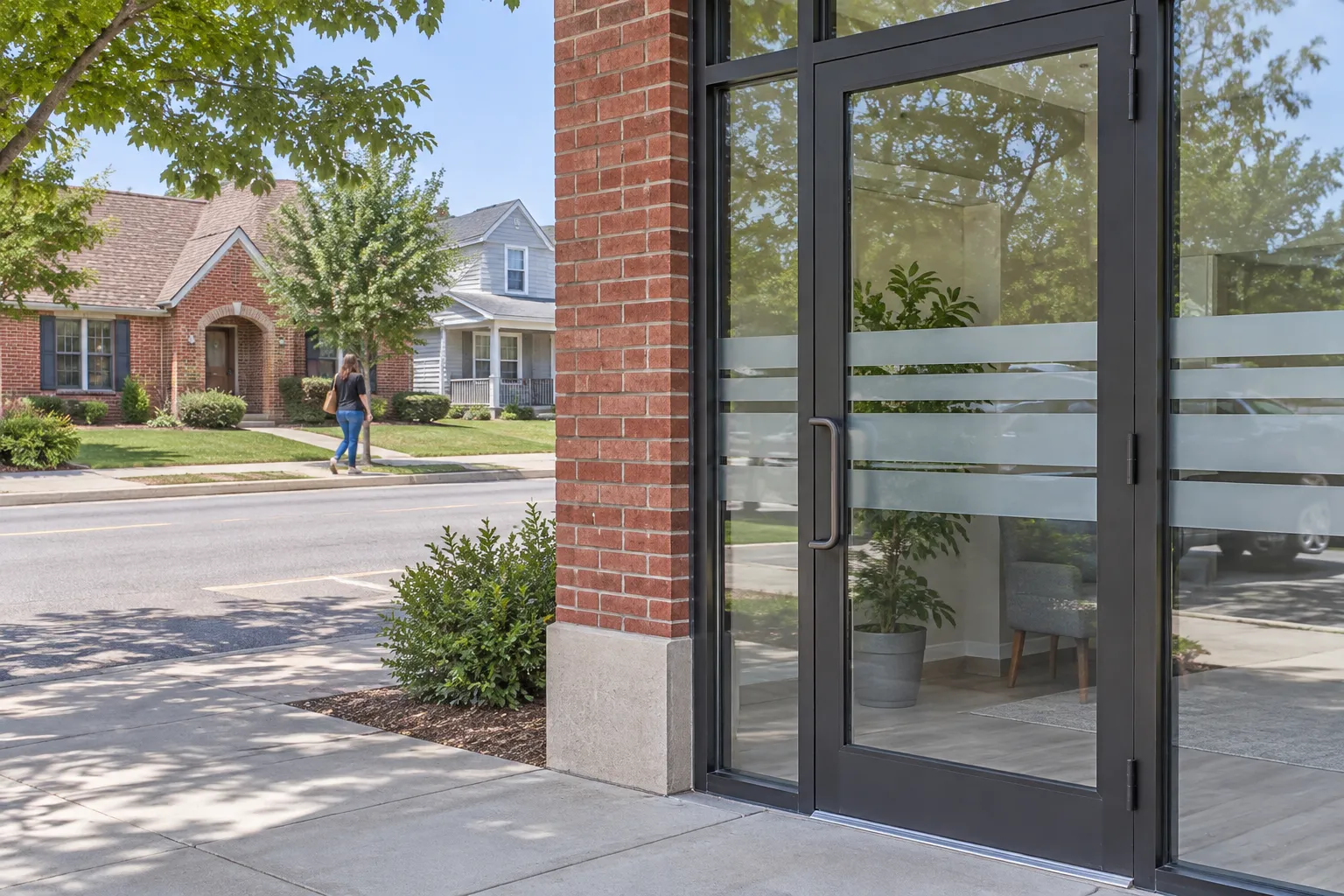
See decorative window film and glass door frosting for the options.
How much does commercial window tinting cost?
Commercial window film is quoted per square foot of glass, with access, film type and working hours affecting the total. Standard solar film costs least, while ceramic, security and custom decorative film cost more. Large jobs can bring the per-square-foot price down. You get a written quote after a site visit before work starts.
Typical ranges and what moves them are on commercial window tinting cost. Tell us about the building and we'll arrange a site visit.
Questions people ask
Is commercial window tinting worth it?
For buildings with large, sunny glass areas, usually yes: lower cooling costs, fewer comfort complaints and fade protection add up, and the IWFA says film can often pay for itself in a few years. For small or well-shaded buildings, the case is weaker, so look at which elevations take direct afternoon sun first.
Do I need landlord approval to tint office windows?
Often, yes. Many leases and property managers control changes to exterior glass, especially mirrored or colored films visible from outside, and some require approved products. Check the lease or ask the property manager before booking. Interior glass partitions are usually simpler to approve.
Can window film be installed while the office is open?
Usually, yes. Film is installed from inside with water-based solution, so work is quiet and clean, and installers can work room by room. Many businesses still book after hours or weekends for desks right against the glass. The schedule is agreed at the site visit.
How long does commercial window film last?
Quality interior commercial film typically lasts 10 years or more, depending on the film, glass and sun exposure. Exterior films last less because they face weather. The manufacturer's written warranty for commercial use tells you what is covered and for how long, so ask for it with the quote.
Does window tint affect what customers see in a storefront?
It can. Darker or mirrored films make displays harder to see from the street in daylight. Retail glass usually gets a light or spectrally selective film that cuts heat and UV fading while keeping displays visible. Ask to see samples on the actual glass at the time of day you trade most.
Read on
- Costs
Guide prices for office, storefront and commercial building window film in Oklahoma City, per square foot by film and project size, and…
- Storefront tint
Window film for storefronts: protecting merchandise from fading, keeping displays visible, cutting heat at the counter, security film and…
- Office window film
Window film for offices: cutting glare on screens and hot spots by the windows, privacy for meeting rooms, safety markings, and planning…
See Oklahoma City window tinting for the other services and what they cost.
Sources
Last changed