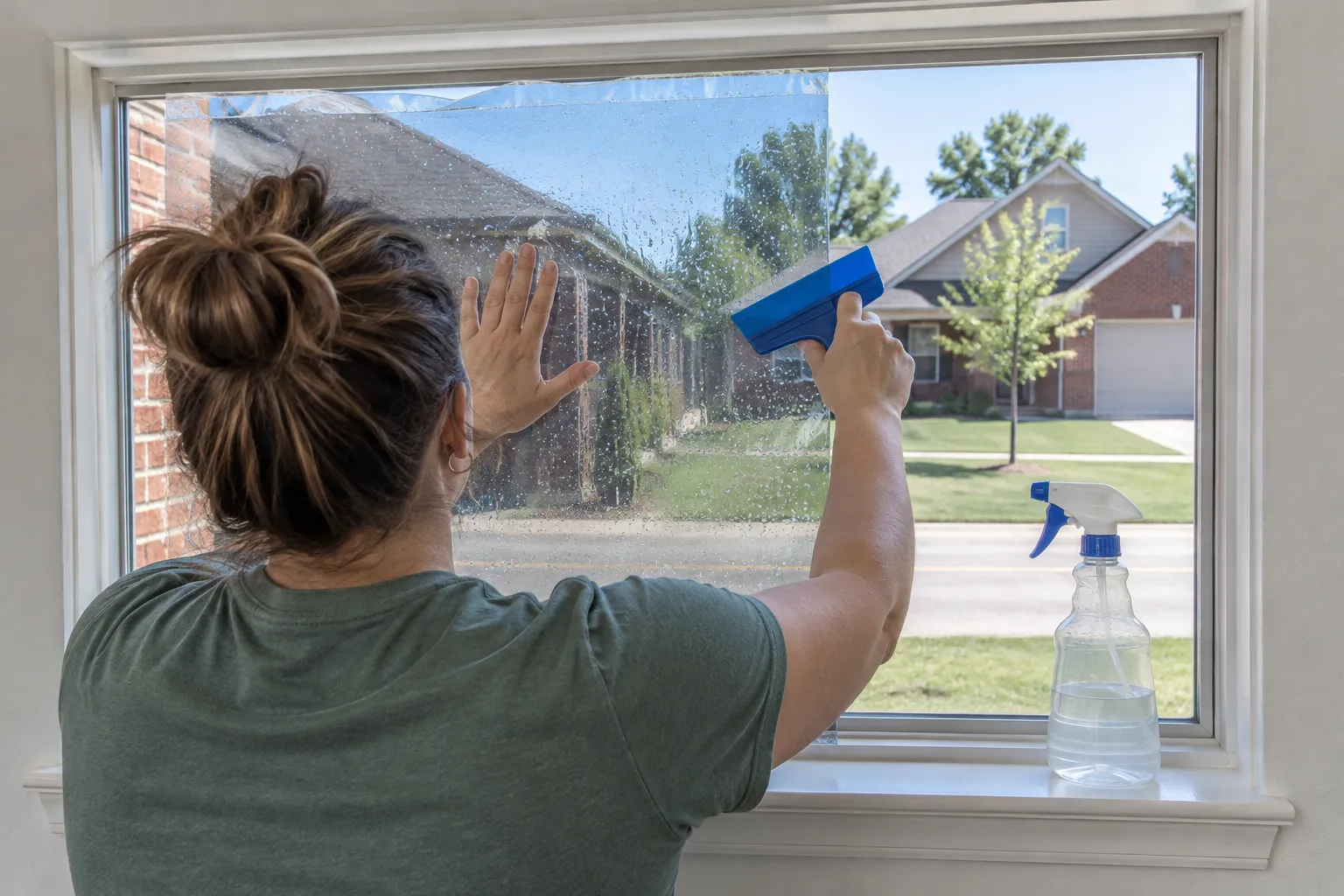
You can tint house windows yourself: DIY window film comes in rolls and kits from home improvement stores, and on a small, flat, single-pane window a patient beginner can get a decent result. The hard parts are getting the glass perfectly clean, trimming neat edges and squeezing out every bubble, and those get much harder on large panes, double-pane or low-e glass, and anything overhead. This page walks through the tools and steps, the common mistakes, and a simple way to decide which windows to do yourself and which to hand to a window film installer.
Can I tint my home windows myself?
Yes, on small, easy windows. DIY film is sold for exactly that, and static cling versions can be peeled off and tried again. Large picture windows, sliding doors, skylights and double-pane or low-e glass are much harder to get right, and the wrong film on the wrong glass can affect warranties. Most people do best with a mix.
A quick way to sort your windows:
| Window | DIY is reasonable | Better to hire out |
|---|---|---|
| Small bathroom or utility window | Yes | |
| Interior glass door or cabinet | Yes | |
| Standard bedroom window, single pane | Possibly | |
| Large picture window | Yes | |
| Sliding glass door | Yes | |
| Double-pane or low-e glass | Yes, film must suit the glass | |
| Skylights and second-floor glass | Yes |
What tools do I need to tint windows?
You need the film, a spray bottle with slip solution, a squeegee, a sharp utility knife with plenty of spare blades, a lint-free cloth or towel, a hard card for edges, and a scraper to clean the glass first. Good light and a dust-free room help as much as any tool.
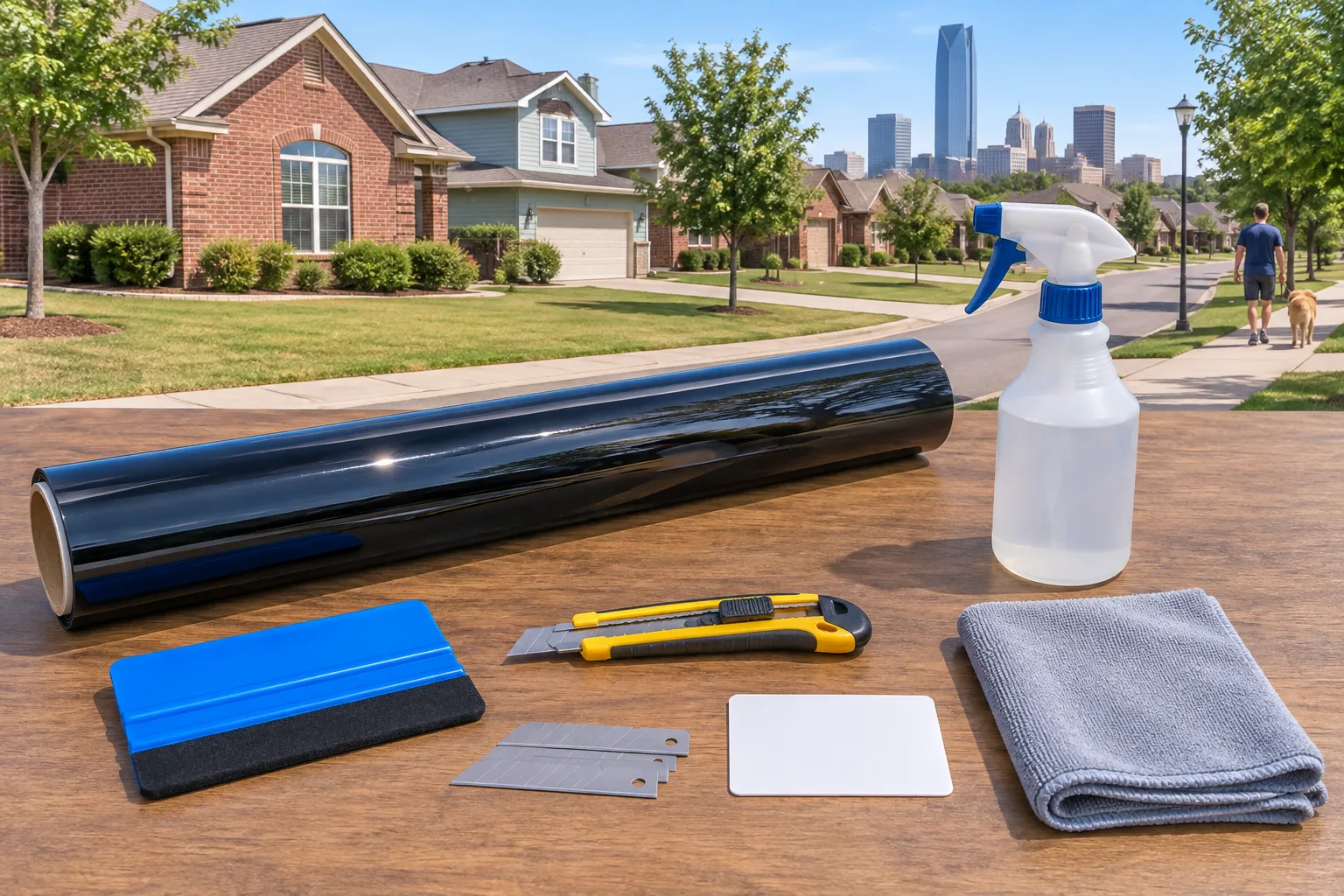
The basic kit:
- Film cut a little larger than the glass.
- Slip solution: water with a few drops of mild soap or baby shampoo, or the film maker's own solution.
- Squeegee with a clean, soft edge.
- Utility knife with new blades; change them often.
- Hard card or edge tool for working water out at the edges.
- Glass scraper and lint-free cloths for preparation.
How do you install window film step by step?
Clean the glass until it is spotless, spray it generously, peel the backing off the film while spraying the adhesive side, lay the film on, squeegee from the center out, then trim the edges with a sharp blade. Finish by squeegeeing again and letting it cure. Most of the result depends on the cleaning.
- Clean. Scrape and wash the glass, including the edges and corners. Any dust or hair will show under the film.
- Measure and cut. Cut film about an inch larger than the glass on each side.
- Spray the glass with slip solution.
- Peel and spray. Peel the backing while spraying the exposed adhesive so it doesn't stick to itself or pick up dust.
- Position. Lay the film on the wet glass and slide it into place.
- Squeegee. Work from the center outward to push water and air to the edges.
- Trim. Cut along the edge with a fresh blade, leaving a tiny gap at the frame.
- Final pass. Squeegee again, then wrap a cloth over a card to soak up water at the edges.
- Cure. Leave it alone while it dries; small water pockets usually clear in the following weeks.
What are the most common DIY window tinting mistakes?
The most common mistakes are dust and hair under the film, creases from handling large pieces, film sticking to itself while you peel the backing, dull blades tearing the edges, and squeegeeing too little so water stays trapped. Choosing a film that isn't suitable for double-pane or low-e glass is the most costly mistake.
How to avoid them:
- Clean twice, and work in a room with doors shut and fans off.
- Get help with any piece wider than your arms.
- Keep everything wet: glass, film and your fingers.
- Change blades after every window or two.
- Check the film maker's guidance for your glass type before you buy.
Is DIY window film as good as professional film?
Usually not quite. Store film is often thinner and has a shorter or more limited warranty than the films professional installers fit, and DIY installation rarely matches a professional finish on large glass. For small windows it can be perfectly good. For your main living-area glass, professional film usually looks better and lasts longer.
The International Window Film Association advises asking what warranty a film carries and how long it is expected to last before you buy; the same questions apply to store film.
Can I put DIY film on double-pane or low-e windows?
Only with a film that the maker says suits that glass. Some films absorb more heat than others, and the IWFA explains that thermal stress on glass is the main risk, with film makers publishing film-to-glass guidance. If the packaging doesn't say the film is suitable for your glass, or you don't know your glass type, ask an installer first.
We explain the issue on tinting double pane windows and window film on low-e glass.
How much do you save by tinting windows yourself?
DIY film costs much less per square foot than installed film, which national guides put at about $5 to $15. On a few small windows that saving is real. On large or difficult glass, the cost of wasted film, a second attempt or a poor result can erase it. Most homeowners save most by doing small windows themselves and hiring out the big ones.
See home window tinting cost for installed prices, and static cling window privacy film for the easiest DIY privacy option.
When should I call an installer instead?
Call an installer for large panes, sliding doors, skylights, double-pane or low-e glass, security film, any window you look at every day, and anything above the ground floor. An installer also checks the glass type, carries the right film for it, and gives a written warranty. You get a written quote after a visit before any work starts.
Tell us which windows you'd rather not tackle and we'll arrange a visit. More on what film suits which room is on home window tinting.
Questions people ask
Is Dawn dish soap good for window tinting?
A few drops of mild dish soap in a spray bottle of water is a common DIY slip solution, letting you slide the film into place before it grips. Use very little: too much soap slows the bond. Some film makers sell their own application solution and recommend it for their film, so check the instructions.
Can I use Windex to apply window film?
It is better not to. Glass cleaners with ammonia or other additives can interfere with some film adhesives, and film makers usually recommend water with a little mild soap or their own solution. Use glass cleaner to prepare the glass if you like, then rinse and switch to slip solution for the film.
Do I need Gila application solution?
Not necessarily. Gila sells its own solution for its DIY films, and following a film maker's instructions is the safest route. Many people use water with a few drops of mild soap or baby shampoo instead. Whichever you use, use plenty of it and keep the film wet while positioning.
How long does DIY window film take to cure?
Curing usually takes from several days to a few weeks, longer in cool or humid weather and on thicker films. Small water pockets and slight haze during that time are normal and usually clear on their own. Don't clean the film or press on the bubbles until it has cured.
Can I remove DIY window film if I mess it up?
Yes. Static cling film lifts straight off and can often be reapplied. Adhesive film can be peeled off soon after fitting while the adhesive is still soft; older film needs heat and scraping. See how to remove window tinting for the steps.
Every service and price guide is on window tinting oklahoma city.
Sources
- International Window Film Association, FAQ
- International Window Film Association, before you buy
- Published national window film cost guides, checked November 2026
Last changed