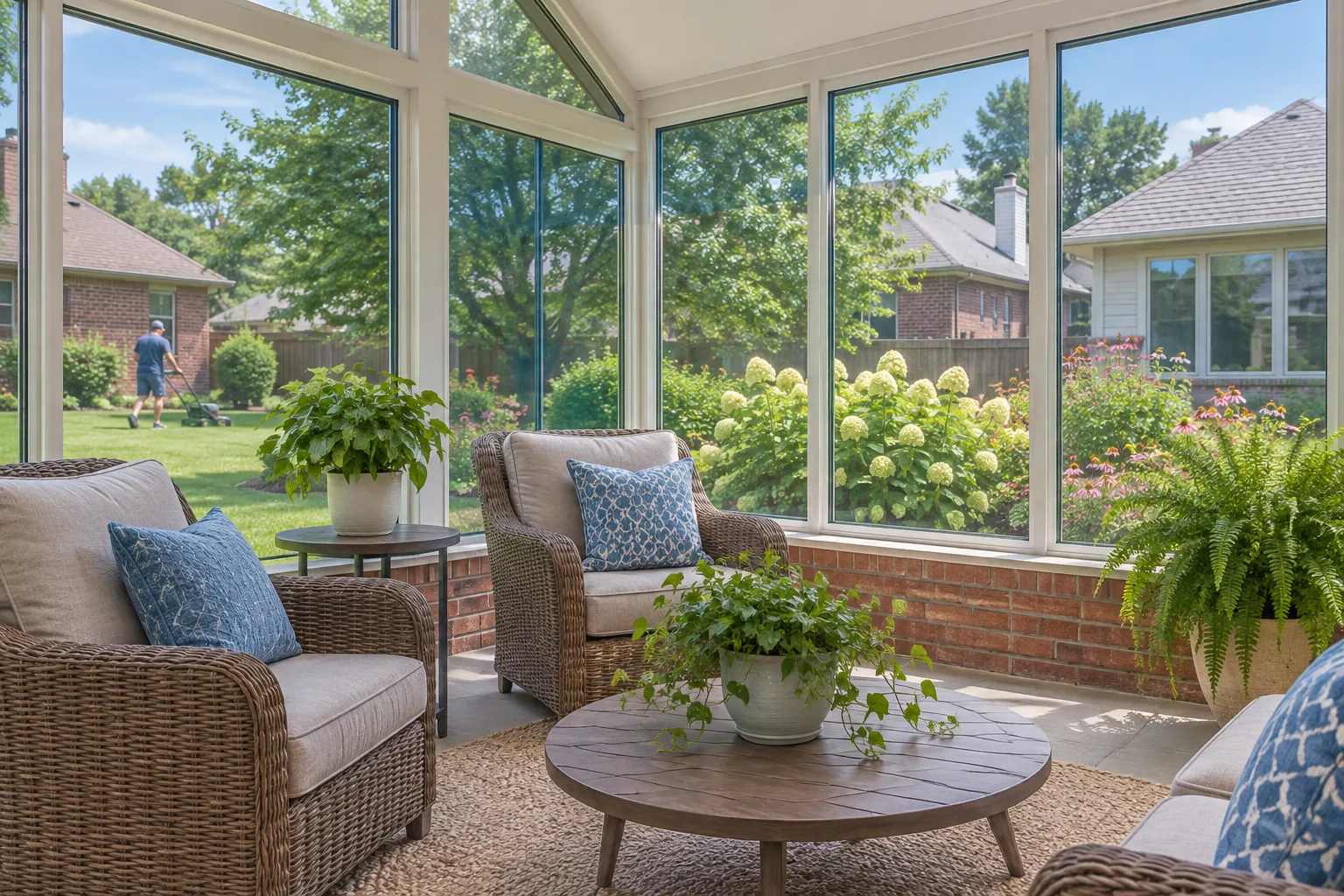
Heat control window film, also called solar control film, is a film for the inside of your windows that rejects part of the sun's heat before it warms the room. It works by reflecting or absorbing solar energy, mostly the invisible infrared that you feel as heat on your skin through the glass. In Oklahoma City, where the temperature reaches 100°F on about 10 days a year on average, it is the film most homeowners ask for first. This page covers how it works, which types reject the most heat, and what to compare before you choose.
Does window tint really reduce heat in a house?
Yes. Heat control film lowers the solar heat that comes through the glass, so sunny rooms stay cooler and the air conditioning works less hard in those rooms. How much it helps depends on the film, which way the window faces, how much direct sun it gets, and the glass it goes on. West and south windows show the biggest difference.
The International Window Film Association lists the same factors: film type, installation quality, window orientation and local climate. That is why one honest figure for "how much cooler" doesn't exist. A west-facing living room with a big single-pane picture window will feel a large change. A shaded north bedroom will barely notice.
Our short answer guide, does window tint reduce heat, covers the physics in plain words.
Which window film blocks the most heat?
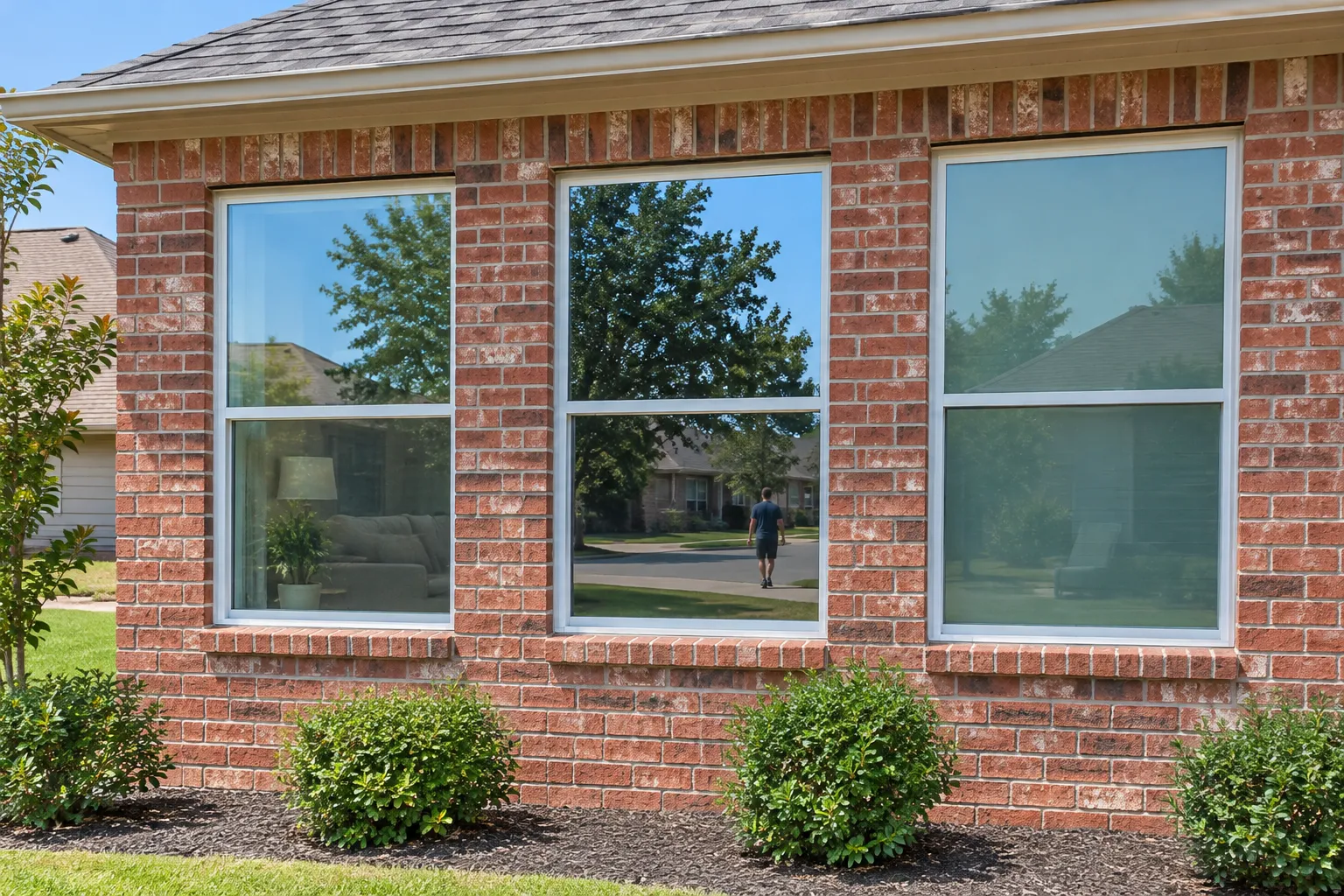
Reflective (metallized) films usually reject the most total solar heat, but they look mirrored from outside and darken the view. Ceramic and spectrally selective films reject a lot of heat while staying much lighter, because they target infrared rather than visible light. Dyed films mostly darken the glass and reject the least heat for their darkness.
| Film type | Heat rejection | Look from inside | Look from outside |
|---|---|---|---|
| Reflective film | Highest for most products | Darker, slight tint | Mirrored in daylight |
| Ceramic film | High, without much darkening | Close to natural | Little change |
| Spectrally selective film | High on infrared, keeps daylight | Nearly clear | Little change |
| Dyed or tinted film | Lower for its darkness | Darker | Darker glass |
The right column for you depends on whether you mind a mirrored look and how much daylight you want to keep. Many Oklahoma City homeowners choose ceramic for living areas and reflective for a garage apartment or a west wall nobody looks out of.
What numbers should I compare on a film's spec sheet?
Compare total solar energy rejected (or the solar heat gain coefficient), visible light transmitted, and UV rejected. The first tells you how much heat the film stops, the second how bright the room stays, and the third how well it protects against fading. Darkness alone is a poor guide to heat.
- Total solar energy rejected (TSER): the share of the sun's total energy the film keeps out. Higher means cooler.
- Solar heat gain coefficient (SHGC): how much solar heat gets through the window with film on. Lower means cooler.
- Visible light transmission (VLT): how much daylight gets through. Higher means brighter rooms.
- UV rejection: quality films are rated up to 99%.
Ask the installer for these figures for the film on your type of glass, because the same film performs differently on single-pane, double-pane and low-e windows.
Can I put heat control film on double-pane or low-e windows?
Usually yes, with the right film. Film manufacturers publish film-to-glass tables that say which films are suitable for which glass, because some films absorb a lot of heat and can add thermal stress to certain glass. A trained installer checks your glass type and sun exposure against those tables before recommending a film.
The IWFA suggests asking for that guidance directly. On low-e windows, the benefit of film also depends on which low-e coating you have and where it sits in the window unit. Our guides to tinting double pane windows and window film on low-e glass go through the details, and window film warranties covers what the warranties say.
Will heat control film lower my energy bills?
It can lower cooling costs in rooms that get a lot of sun, but the saving varies widely by house. The IWFA, citing Energy Star, says film may save 20% to 40% on energy costs during the cooling season. Treat that as a best case for very sunny glass, not a promise for every home.
What makes the biggest difference is how much of your cooling load comes through glass. A house with large west and south windows and little shade gains the most. A house with small, shaded windows and good attic insulation gains less. Our guide to window film energy savings explains how to judge it for your own home.
Does heat control film help in winter?
Some films help a little in winter, especially insulating or low-e films that reduce heat escaping through the glass. Most solar control films are designed for summer and do little for winter heat loss. If you want both, ask specifically for a film rated for winter performance, and compare it on your windows.
We cover the winter question in window film for winter.
Is heat control film better than solar screens or blinds?
Each blocks heat differently. Exterior solar screens stop heat before it reaches the glass, so they are very effective, but they change the look of the house and dim the view. Blinds block heat after it is already inside. Film keeps the view and works all the time without anyone adjusting it. Many homes use film plus blinds.
The full comparison is on solar screen vs window film. If cost is the main question, see the cost to block heat through windows.
What does heat control window film cost?
Heat control film is priced per square foot of glass. Standard solar film sits at the lower end of the range published in national cost guides, while ceramic and spectrally selective films cost more. You get a written quote after a visit, for your windows and your chosen film, before any work starts.
Typical ranges and what moves them are on home window tinting cost and ceramic window film cost. Tell us which rooms get too hot and we'll arrange a visit.
Questions people ask
What is the best window film to keep heat out?
For most homes, a ceramic or spectrally selective film is the best balance: high heat rejection while keeping rooms bright and the view natural. If keeping daylight doesn't matter and a mirrored look is fine, a reflective film usually rejects the most total heat. Compare total solar energy rejected on the spec sheet, not darkness.
Can I put heat control film on the outside of a window?
Yes, exterior films exist and stop heat before it reaches the glass, which can help with some glass types. They are tougher to make last, because they face weather, hail and cleaning, and they usually need replacing sooner. Most home installations use interior film, which is protected and lasts longer.
Will heat control film make my rooms dark?
Not with a ceramic or spectrally selective film: many reject a lot of heat while letting most daylight through. Reflective and darker dyed films do make rooms noticeably dimmer. If a room is already dim, ask to see light films with good heat rejection on your own window before deciding.
Does heat control film stop furniture fading?
It slows fading but doesn't stop it completely. Quality films block up to 99% of UV, one of the main causes of fading, and also cut some visible light and heat, which play a part too. The IWFA notes that no film eliminates fading entirely, so rugs and furniture in strong sun still change over many years.
How long does heat control window film last?
Quality interior film typically lasts 10 years or more, depending on the film, the glass and how much direct sun it gets. The IWFA says film life varies with film type, glass type, window construction, orientation and location. Manufacturer warranties on residential film are often long, so ask what yours covers.
Read on
- Costs
Compare what it costs to block window heat with solar film, ceramic film, solar screens, blinds or new windows, and which option suits an…
- Does tint reduce heat
Yes, the right window film cuts solar heat through glass.
- Solar screens vs film
Solar screens and window film compared on heat, view, looks, durability, maintenance and cost, with which suits which window in an…
- UV blocking film
How UV blocking window film protects skin, floors and furniture, why glass alone lets UVA through, and how clear UV film differs from tint.
- Energy savings
How much window film can save on cooling, why results vary so much between homes, how to estimate your own savings, and what film can't fix.
- Film on low-e glass
Can you put window film on low-e windows?
More services are listed on the window tinting guide for Oklahoma City.
Sources
Last changed